Join us for the second instalment of the Jumping Rivers AI in Production conference!
Hosted in the centre of Newcastle upon Tyne, UK, this conference will delve into the world of AI and Machine Learning, from model deployment, monitoring and observability to generative AI, retrieval-augmented generation and responsible AI.
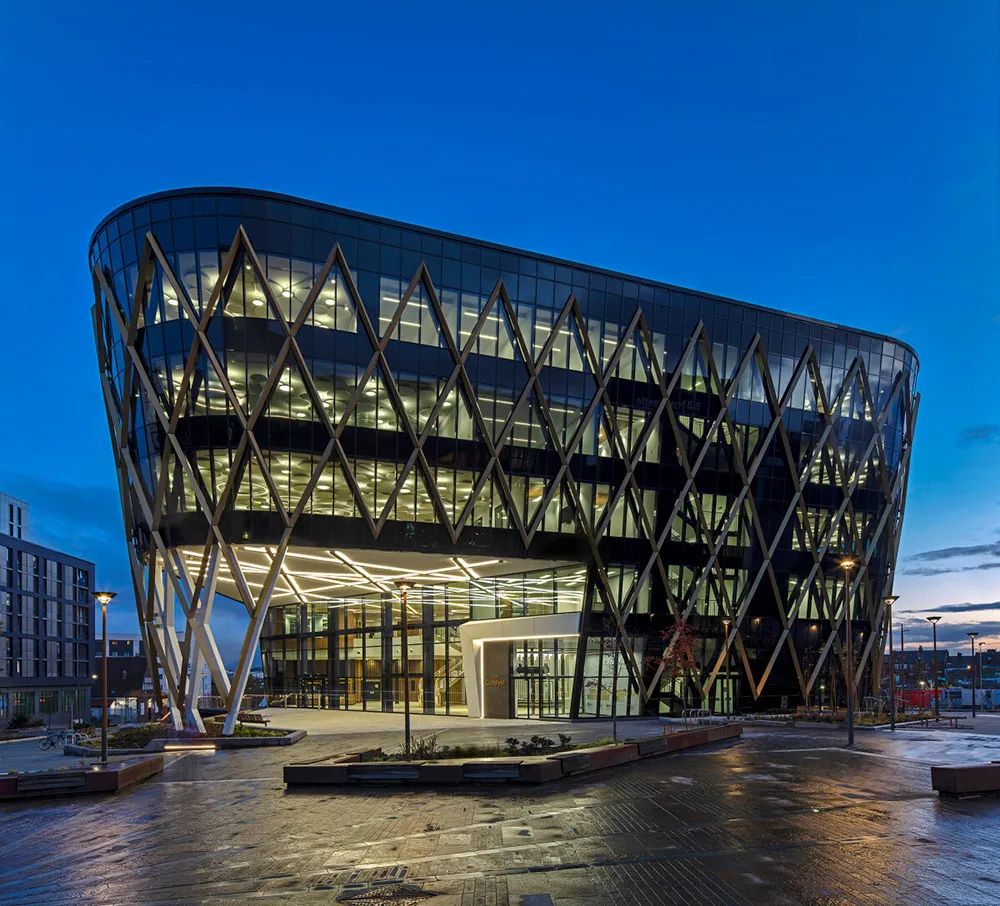
Find us at The Catalyst, 3 Science Square, Newcastle Helix, Newcastle, NE4 5TG.
Talks and workshops on what it takes to ship AI, from MLOps pipelines to LLM reliability to the team structures behind them.
Call for speakers
Got something to
share?
AI in Production is about the reality of running AI and machine learning systems, not just building them. We'd love to hear from people who've actually shipped something and lived with what came next, what worked, what surprised you, what you'd do differently next time.
We're looking for talks that have a production or operational thread running through them, they're grounded in a system that exists and is genuinely used. That could look like:
Deploying, scaling, or monitoring models in the real world
Observability, reliability, and incident response for ML/AI systems
Data pipelines and infrastructure behind production AI
LLM and agent reliability: evaluation, guardrails, cost, latency, failure modes
Fine-tuning, RAG, or generative AI in a live product
Responsible AI in practice: governance, safety, or compliance as it actually plays out
Team, process, or organisational lessons from keeping AI running day to day
We're not looking to be overly prescriptive about the exact topic, and we'd love a wide range of systems and industries represented. A useful test, if you're not sure whether your talk fits: if you swapped out “AI” for any other kind of software system, would the talk still hold up? If yes, it's not quite what we're after. If no, and the AI-specific parts are actually central to the story, that's what we're looking for.
We are now accepting proposals for talks at AI in Production 2027.
Submit your title and abstract (max. 300 words), using the form below, by .
AI in Production will take place over two days, split into a day of workshops and a day of
conference talks. Tickets are available for either the conference only, or for the
conference and one of the workshops.
Day 1 / Workshops
09:00 registration / 09:30–17:00 / reception until 19:30
Hands-on workshops run by Jumping Rivers pros and other experts in the field. Take one morning and one afternoon workshop; lunch is included. All tickets include the evening dinner and drinks reception in the atrium of the Catalyst building.
Full line-up and timings to be announced. Here's the shape of the day.
09:00 Registration & coffee
09:30 Morning workshops
12:45 Lunch
13:45 Afternoon workshops
17:00 Dinner reception Social
Day 2 / Talks
09:00 registration / 09:30–16:15
A full day of talks and lightning talks from practitioners across industries.
Full line-up and timings to be announced. Here's the shape of the day.
09:00 Registration & coffee
09:30 Talks and lightning talks
16:15 Conference close (approximate)
Hands-on day
The workshops.
Workshops will be announced soon.
The line-up
Speakers,
loading…
We're putting together a line-up of practitioners who run AI in
production day to day. Names land soon.
Want to be one of them?
AI in Production will follow the code of conduct
as laid out by the R Consortium. Contact events@jumpingrivers.com if you have any
concerns or wish to report an incident.